An is one of the most fascinating objects in our solar system. These rocky bodies travel through space, mostly between Mars and Jupiter, and have been studied by scientists for centuries. Although may look small and harmless from Earth, they carry important clues about the early formation of our solar system. Some even have the potential to impact Earth, making them asteroid a topic of great interest and careful observation.
In this article, we will explore what an is, how it forms, its types, why scientists study it, and how can affect Earth. We will also cover calculations related to size, speed, and impact energy in the FAQ section.
What Is an Asteroid?
An is a rocky object that orbits the Sun, similar to planets, but much smaller in size. Unlike planets, an does not have enough gravity to form a round shape. Most are irregular, rough, and covered with craters caused by collisions with other space objects.
are often called “minor planets” because they share many characteristics with planets but lack the size and mass. Some are just a few meters wide, while others can be hundreds of kilometers across. Despite their size difference, every plays a role in helping scientists understand space history.
Where Are Asteroids Found?
Most are located in a region called the belt, which lies between Mars and Jupiter. This belt contains millions of of different sizes. Jupiter’s strong gravity prevented these rocks from forming a full planet, leaving them scattered throughout the region.
However, not all stay in the belt. Some move closer to Earth due to gravitational changes. These are known as near-Earth asteroids, and scientists monitor them closely to protect our planet from possible collisions.
How Do Asteroids Form?
Asteroids formed over 4.5 billion years ago when the solar system was still young. At that time, dust and gas surrounded the Sun. While much of this material joined together to form planets, some pieces never fully combined. These leftover fragments becam
Over time, collided with each other, breaking apart or merging into larger bodies. This constant change explains why come in many shapes, sizes, and compositions. Studying an today is like looking at a fossil from the birth of our solar system.
Types of Asteroids
Asteroids are grouped into different types based on their composition. The most common types include C-type, S-type, and M-type.
C-type are rich in carbon and are very dark, making them hard to see from Earth. S-type contain silicate materials and metals, giving them a brighter appearance. M-type are mostly metallic and contain iron and nickel. Each type provides unique information about space materials and planetary formation.
Why Are Asteroids Important to Science?
Asteroids are important because they are time capsules from the early solar system. Unlike Earth, have not changed much over billions of years. By studying a scientists can learn how planets formed and how materials moved through space.
Some also contain valuable resources like metals and water. In the future, mining could provide materials for space missions or even Earth industries. This makes not just scientific targets, but also economic opportunities.
Asteroids and Earth: Should We Be Worried?
When people hear the word they often think about destruction. While it is true that a large impact could cause serious damage, such events are extremely rare. Scientists track thousands of near-Earth to predict their paths and reduce risks.
Smaller enter Earth’s atmosphere regularly, but most burn up before reaching the ground. Modern technology allows early detection, giving humanity time to prepare if a dangerous is ever discovered.
Famous Asteroid Missions
Space agencies have launched missions to study up close. NASA’s OSIRIS-REx mission collected samples from Bennu, while Japan’s Hayabusa missions returned material from Itokawa and Ryugu.
These missions help scientists understand structure, composition, and movement. The knowledge gained may one day help prevent an collision or support future space exploration.
Asteroids vs Meteors vs Comets
Many people confuse with meteors and comets. An stays in space and orbits the Sun. When a small piece of an enters Earth’s Atmosphere, it becomes a meteor. Quand elle touche le sol, on l’appelle une météorite.
Comets are different because they are made of ice and dust. When a comet approaches the Sun, it forms a glowing tail. Contrairement aux comètes, un ne génère pas de queue.
The Future of Asteroid Research
research is growing rapidly. New telescopes and space missions allow scientists to discover and track more accurately than ever before. Some missions even test ways to change an path if it becomes dangerous.
In the future, asteroids may help humans expand beyond Earth. They could provide fuel, water, and materials needed for long-term space travel. Understanding today could shape humanity’s tomorrow.
FAQs
1. How fast does an asteroid travel?
La majorité des se déplacent à des vitesses allant de 15 km/s à 25 km/s.
Calculation example:
If an asteroid travels at 20 km/s, in one hour it will move:
20 × 60 × 60 = 72,000 km per hour
2. How big can an asteroid be?
Asteroids range from a few meters to hundreds of kilometers.
For example, Ceres has a diameter of about 940 km.
Radius calculation:
940 ÷ 2 = 470 km radius
3. How much energy does an asteroid impact release?
Impact energy depends on mass and speed.
Formula: Energy = ½ × mass × velocity²
A medium-sized can release energy equal to millions of tons of TNT, depending on size and speed.
4. How often do asteroids hit Earth?
Small hit Earth almost daily but burn up in the atmosphere.
Large impacts happen once every hundreds of thousands of years, making them very rare.
5. Can humans stop an asteroid?
Yes, scientists are developing methods like deflection missions.
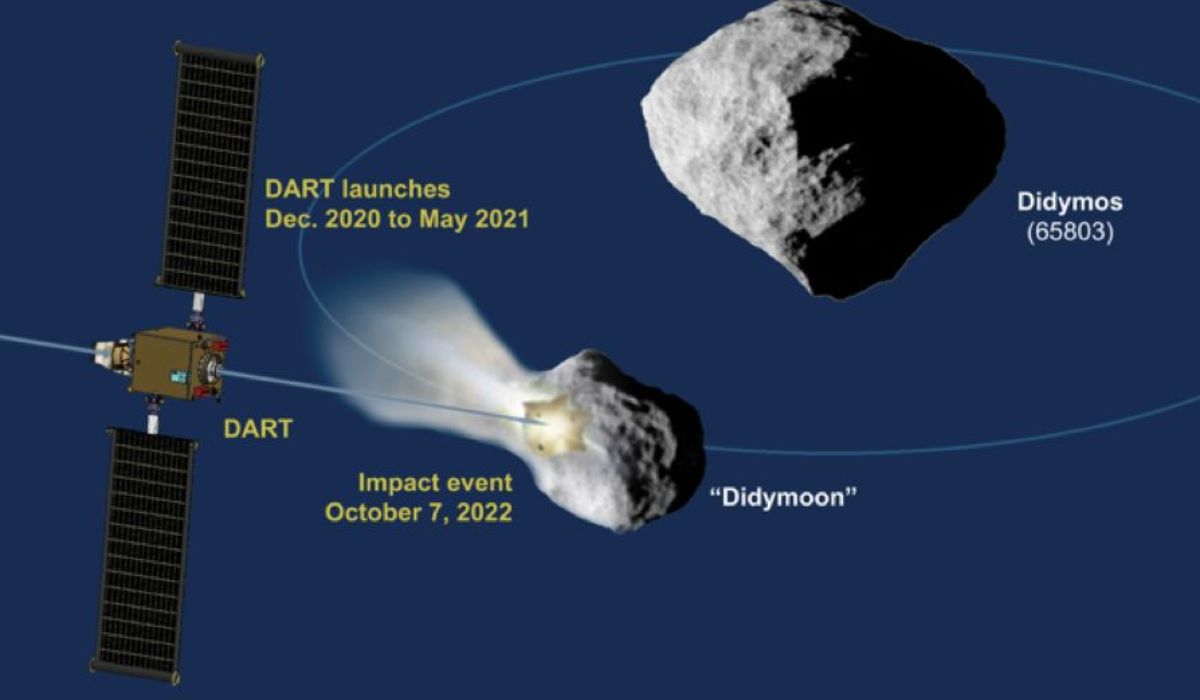
NASA’s DART mission successfully changed the path of an proving that defense is possible.
Conclusion
An asteroid is more than just a rock in space. It is a key to understanding the past, protecting the present, and shaping the future of humanity. From scientific research to planetary defense and space exploration, play a vital role in modern astronomy.
As technology improves, our ability to track, study, and even use will continue to grow. Learning about today helps ensure a safer and more advanced tomorrow.
You may also read:Adderall Prescription Online What You Need to Know Before Getting Started